

What are Reverse Osmosis Containers?
Water Care Foundation provides reverse osmosis container equipment through collaborative solutions that streamline the process. Mobility, durability, and protection are all important features we ensure are integrated into our mobile water treatment systems, which also help reduce long-term costs.
Fast delivery and numerous other solutions focused on increasing safety and convenience have set our containerized equipment apart from the competition. Eliminate the complexity of large-scale reverse osmosis plants with containerized water treatment systems. By selecting pre-designed, modular plants, fully assembled in various-sized containers. The complexity and construction of water purification systems are no longer necessary. Containerized water treatment systems are shipped. With a short training session. The assigned personnel are ready to monitor the systems and produce high-quality drinking water within days of delivery.
Principles of Reverse Osmosis
Reverse osmosis (RO) is a water purification technology that works on the principle of pressure filtration through a semi-permeable membrane. This process effectively separates dissolved salts, contaminants, and impurities from water. Allowing only clean water molecules to pass through while leaving behind larger particles and unwanted substances.
How It Works
The basic mechanism of reverse osmosis involves applying pressure to a concentrated solution, forcing water molecules through a semipermeable membrane. This membrane is designed to be selectively permeable, meaning it allows water to pass through while blocking salts and other contaminants.
Under normal circumstances, reverse osmosis moves water from an area of low dissolved concentration to an area of high dissolved concentration. However, reverse osmosis reverses this flow by applying sufficient opposing pressure to overcome the osmotic pressure, allowing clean water to be drawn from the concentrated side.
Learn about Commercial Reverse Osmosis System Applications
Design Flexibility and Robust Performance
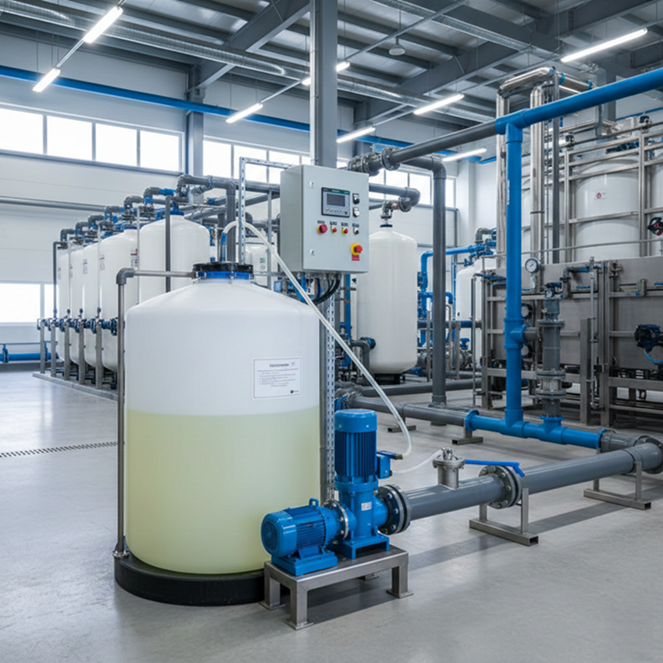
What we see here is the culmination of smart engineering, where an advanced water treatment system, often based on reverse osmosis (RO) technology, is integrated into a robust steel enclosure. This container not only acts as a protective shell but also allows for the “manufacturing” of the water treatment plant in a controlled factory environment, ready for operation as soon as it arrives on-site.
The reverse osmosis system inside is at the heart of the process. This system pumps raw water (whether brackish well water, seawater, or contaminated surface water) under high pressure through semi-permeable membranes. These membranes separate dissolved salts, heavy metals, bacteria, and viruses, producing purified water suitable for drinking or industrial use.
Suitable Applications for Reverse Osmosis Containers
The real magic of these units lies in their portability and rapid deployment. This technology has revolutionized many sectors:
- Humanitarian and Disaster Relief: Following earthquakes, floods, or conflicts, these units can be shipped by air or land to begin producing safe drinking water for those affected within hours of arrival.
- Remote Projects and Industry: Providing high-quality water to large construction sites or mining camps. Or oil and gas facilities in remote areas where water infrastructure is unavailable.
- Rural and island development: Providing sustainable and self-sufficient solutions for small communities that cannot afford to build a large, conventional treatment plant.
Overcoming environmental and logistical challenges
The flexibility of containerized systems enables them to overcome two major obstacles in conventional water projects: environmental and logistical challenges.
Environmentally, fixed treatment plant projects often require large areas and costly excavation and construction work that depletes resources and impacts the natural landscape. In contrast, a containerized unit occupies a very small area, reducing the project’s environmental footprint. Furthermore, many of these systems are designed to operate with high energy efficiency and can be easily integrated with renewable energy sources such as solar panels, making them ideal solutions for locations with weak electricity grids or those striving for full sustainability.
Logistically, the biggest challenge lies in the long waiting period between identifying the water need and producing the first drop. Conventional plants can take years for design, approvals, and construction. While a containerized unit, weighing only a few tons, can be transported, installed, and operational within days or weeks, this shift from slow implementation to rapid deployment represents a radical change in emergency response strategies and project planning. It saves valuable time that directly translates to saving lives or ensuring the continuity of vital industrial operations.
Economic Advantages: Cost and Operational Efficiency
Although the initial cost of a sophisticated unit may seem high. It delivers significant long-term economic savings compared to traditional solutions:
- Nearly Zero Construction Costs: The costs of constructing buildings and concrete structures for the plant are eliminated or reduced.
- Relocatable Asset: The unit is a relocable asset that can be used in multiple projects. Instead of dismantling a fixed plant when a project is completed. The container can be moved, and operations resumed at a new location, maximizing return on investment.
- Standardized Manufacturing Quality: All components are assembled and tested at the factory before shipment. This reduces the risk of errors on-site and lowers long-term maintenance costs.
- Ease of maintenance and operation: The compact and standardized design facilitates operator training and access to components for routine maintenance, minimizing downtime.
These systems bridge the urgent need for water and limited available resources, offering a cost-effective and time-efficient solution.
The Future of Compact Water Treatment Units
The future of this technology is moving towards greater intelligence and automation. Recent advancements include the integration of sophisticated remote control systems that allow for monitoring water quality, membrane efficiency, and energy consumption from anywhere in the world via the internet. Hybrid systems are also being developed that combine reverse osmosis (RO) technology with ultrafiltration (UF) or ultraviolet (UV) disinfection to ensure the highest quality levels, regardless of the raw water type.
Work is also underway to miniaturize components to increase space efficiency within the container. This enables the production of larger quantities of water with the same external volume, or even the design of smaller units that can be loaded onto small trucks.
In conclusion, the water problem is no longer just an environmental issue, but a logistical and technological one. These robust blue containers offer a practical answer to this complex equation, confirming that access to safe drinking water is no longer a luxury. But a right that can be achieved—literally—by bringing a “water factory” to you.
Read also: Maintenance and Operation of Commercial RO Systems
The Importance of Operator and Management Training
Although containerized water treatment units are designed for simplified operation, their efficiency and sustainability depend critically on the level of training provided by operators and management. A deep understanding of plant operations, from pump operation and periodic water quality monitoring to backwashing procedures and maintenance of sensitive reverse osmosis (RO) membranes, can mean the difference between successful operation and costly failure. Therefore, we believe that providing the unit is only complete with ensuring comprehensive knowledge transfer. Our role in this regard is to provide specialized and intensive on-site training programs that combine theoretical and practical training, enabling local teams to confidently take over. This investment in human capital ensures the continuity of optimal operation, extends equipment lifespan, and reduces reliance on external support. It reflects our commitment to providing sustainable and self-sufficient solutions.