

The Role of Pumps in Water Treatment Plants
Pumps play a pivotal role in water treatment plant operations, facilitating the movement and treatment of water through the various purification stages. These mechanical devices are essential for the efficient transfer of drinking water and wastewater, ensuring their effective treatment and distribution. The critical importance of pumps in water treatment stems from their impact on public health, environmental sustainability, and operational efficiency, especially given the ongoing global challenges of water scarcity and pollution.
Types of pumps used in water treatment plants include centrifugal pumps, positive displacement pumps, submersible pumps, and variable displacement pumps, each with specific functions during the treatment process. Centrifugal pumps are particularly preferred due to their ability to handle large volumes of water, making them essential in stages such as sedimentation and filtration. In contrast, positive displacement pumps excel in applications requiring precise flow control, especially for injecting chemicals for disinfection purposes.
Read also: The Importance of Water Pumps in Reverse Osmosis Plants
Types of Pumps Used
Water treatment plants use various types of pumps to facilitate the movement and efficient treatment of water. The main categories of pumps used include positive displacement pumps, centrifugal pumps, submersible pumps, and variable displacement pumps.
Centrifugal Pumps
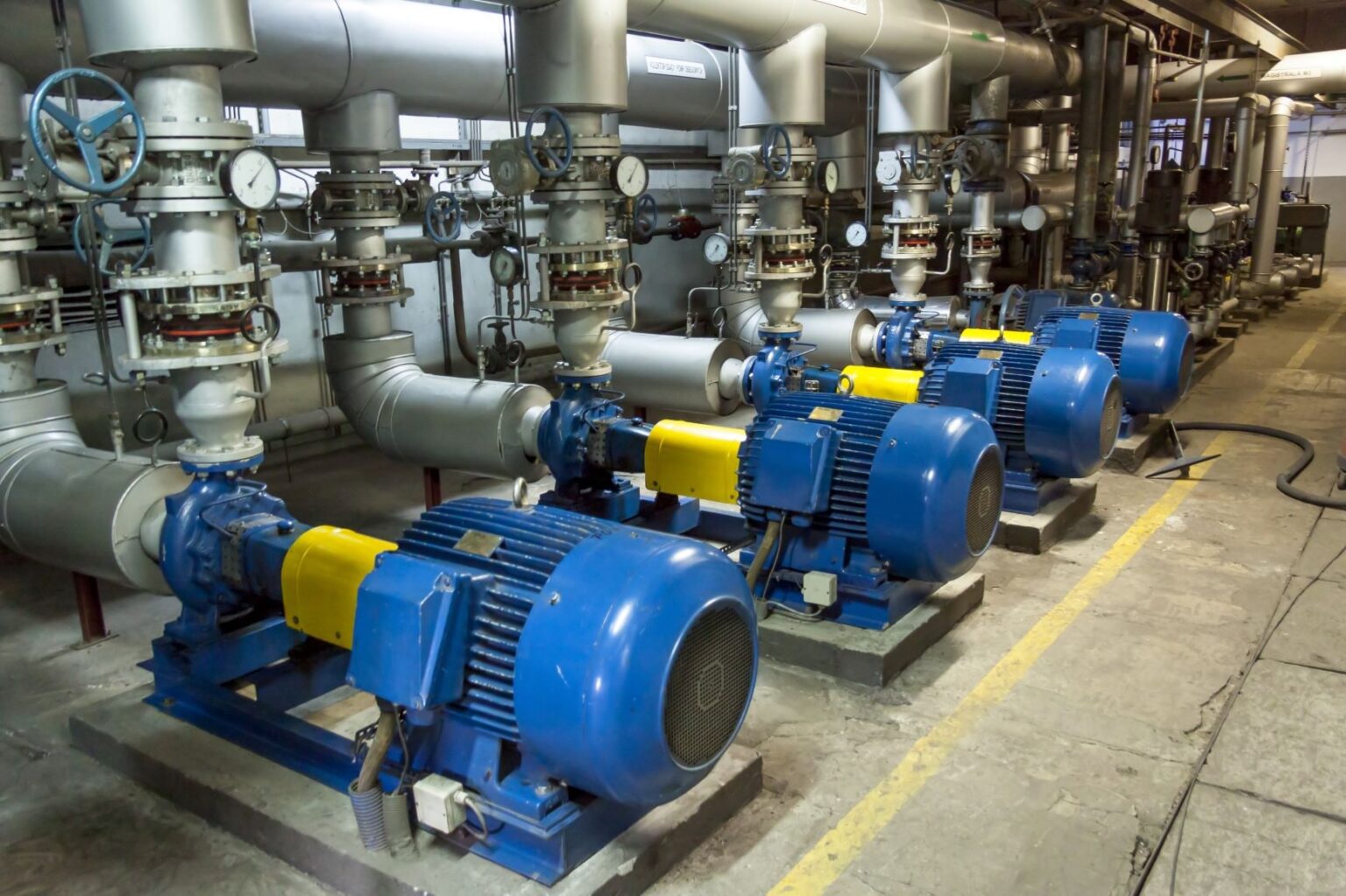
Centrifugal pumps are among the most commonly used pumps in water treatment plants. They convert rotational kinetic energy into hydrodynamic energy to generate flow. These pumps operate using an impeller that generates centrifugal force, which pushes water through the pump casing and creates discharge pressure. Centrifugal pumps are versatile and can handle large volumes of water, making them suitable for various stages of the water treatment process, including screening, sedimentation, filtration, and disinfection.
Positive Displacement Pumps
Positive displacement pumps are designed to mechanically displace fluids while maintaining a constant flow rate at a specific speed, regardless of pressure changes. These pumps are particularly effective at handling high-viscosity fluids and are commonly used in applications such as chemical injection during disinfection processes. There are two main classifications of positive displacement pumps: rotary and reciprocating.
Rotary and Reciprocating Pumps
Rotary positive displacement pumps operate by rotating the pumping element, while reciprocating pumps utilize a constant reciprocating motion. Common types include gear pumps, lobe pumps, and peristaltic pumps. These pumps are particularly advantageous in applications requiring precise flow rates and can efficiently treat wastewater containing solids or impurities.
Submersible Pumps
Submersible pumps are designed to operate underwater, making them ideal for wastewater treatment applications in confined spaces. They are highly efficient, available in single-stage and multi-stage designs, efficiently meet high-lift requirements, and minimize maintenance needs.
Variable Displacement Pumps
Variable displacement pumps maintain a constant volume or flow rate of water under varying vertical pressures. Common types include piston pumps and screw pumps. These pumps are used in water treatment plants due to their reliability in providing flow rates under different operating conditions.
Functions of Pumps in Water Treatment
Pumps are an integral part of water treatment plant operations, performing a variety of essential functions that facilitate water purification and distribution.
Injection and Treatment of Chemicals
One of the main roles of pumps in water treatment is injecting chemicals into the water stream for treatment purposes. For example, pumps are used to introduce water treatment chemicals, such as chlorine, which is crucial for disinfection and maintaining water quality. Additionally, small air pumps are used to inject air into treatment tanks, which promotes the oxidation of contaminants such as iron and hydrogen sulfide, thus facilitating their removal through subsequent filtration processes.
Water Movement and Distribution
Pumps also play a critical role in the movement of water through the various stages of treatment. They transport water from the primary treatment stage to the filtration systems, ensuring its efficient passage through the various treatment processes. Centrifugal pumps are highly efficient in moving water through filtration and sedimentation systems, helping to maintain consistent flow rates that improve the efficiency of these processes. After water treatment, pumps are responsible for distributing it to residential and industrial areas and other consumers, making their reliable operation essential to meet the growing needs of the population.
Wastewater Management
In wastewater treatment, pumps are fundamental to the movement and management of wastewater throughout the treatment process. They assist in sorting incoming wastewater, removing sediment, and transporting sludge for further treatment.
Pumps are designed to handle demanding conditions, such as moving liquids containing solids and corrosive materials, which are common in wastewater. Moreover, the effectiveness of wastewater treatment depends heavily on the efficiency of pumping systems, as they are responsible for moving wastewater through the primary, secondary, and tertiary treatment stages.
Efficiency and Longevity
The design and maintenance of pumps are critical to ensuring the longevity and efficiency of wastewater treatment operations. Efficient pumping reduces equipment wear, extending pump life and lowering operating costs. Regular maintenance, including leak and blockage checks, filter cleaning, and pump calibration, is essential to ensure optimal performance and prevent breakdowns. By adopting smart technologies and data-driven methods, water treatment plants can enhance pump efficiency and performance. This leads to reduced water waste and lower energy consumption.
Design Considerations
In the context of water treatment plants, pump design is critical to the efficiency, reliability, and cost-effectiveness of the treatment process. Several key factors influence pump selection and configuration, which in turn affect maintenance costs, energy consumption, and operational reliability.
Total Cost of Ownership
The Total Cost of Ownership (TCO) is a critical consideration when designing pump systems for water treatment plants. The initial plant design and pump technology determine a significant portion of the total plant lifecycle costs, approximately 80%. The remaining costs include installation, environmental disposal, and downtime, while the initial pump purchase cost represents about 10% of the TCO. Therefore, investing in appropriate equipment and design from the outset can yield substantial long-term savings.
Key Design Factors
Several critical factors must be considered when designing and selecting progressive cavitation (PC) pumps for wastewater treatment applications:
Liquid Characteristics
- Solid Content: The solids content in the pumped fluid affects various design parameters, including pump speed, configuration, and maximum RPM. High solids content may require specialized seals, corrosion-resistant materials, and robust motor specifications.
- Particle Size: Every pump has a maximum particle size it can efficiently handle. For progressive cavitation pumps, this includes considering both the average particle size and the maximum soft particle size, which is typically related to the impeller diameter.
Pump Configuration
Selecting the correct pump configuration is crucial for ensuring efficient operation and minimizing maintenance requirements. This includes evaluating the motor configuration, sealing options, connection types, and piping systems. Proper design can reduce downtime and extend pump life.
Installation and Operational Considerations
Factors such as space constraints, pipe sizes, and special installation requirements also influence the suitability of pump design. Operators must ensure that the selected pump is compatible with overall system requirements and operational objectives.
Maintenance and Ease of Service
Ease of maintenance is a key feature in pump design. Features that reduce the frequency of maintenance, minimize the number of spare parts required, and facilitate access for repairs significantly improve operational efficiency and reduce long-term costs. Regular maintenance procedures, including inspections and cleaning, are essential for maintaining optimal performance.
Efficiency and Performance Impact
Efficient operations in water treatment plants are critical, as they significantly reduce energy consumption, minimize waste, and lower maintenance costs, thereby enhancing overall profitability. Pump performance, a vital component of these systems, significantly impacts operational efficiency.