

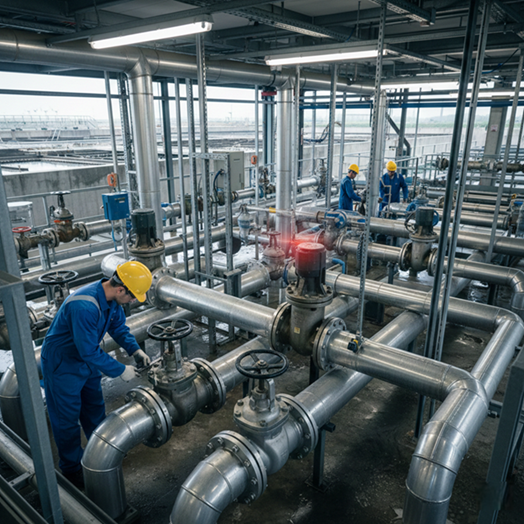
The Importance of Valve Maintenance in Water Treatment Plants as a Cornerstone of Operational Efficiency
Water treatment plants are vital facilities that ensure the sustainability and quality of water resources for communities. At the heart of every treatment process, thousands of valves act as crucial control points, regulating pressure, controlling flow rates, and directing sludge and other wastewater through the various purification stages. The complete dependence of these plants on the proper functioning of these components makes efficient and regular valve maintenance an indispensable practice and a cornerstone for ensuring efficient and safe operation around the clock.
In this context, valve maintenance is not merely a routine procedure; it is a comprehensive program designed to extend the lifespan of these expensive assets, prevent unexpected failures, and maintain the chemical and mechanical accuracy of the system. Neglecting these practices can lead to serious consequences beyond simple emergency breakdowns, including wasted water leaks, reduced performance that compromises the quality of the final product, and catastrophic failures that can cause complete system shutdowns and the resulting high repair costs and operational penalties. Therefore, implementing a comprehensive maintenance program is essential to ensuring operational reliability and preventing unplanned losses.
Read also: Maximizing the Efficiency of Greywater Treatment Equipment Using the Right Valves
Types of Valves and Specialised Maintenance Requirements
The valves used in water treatment plants vary in their function and complexity, requiring tailored maintenance programs to meet the specific needs of each type.
Control Valves
Control valves play a crucial role in regulating pressure and flow rate within water treatment systems. Due to their complex nature, which includes actuators, positioners, and precision components that respond to electronic or pneumatic signals, these valves require highly specialized and precise maintenance practices.
Essential Maintenance Requirements for Control Valves:
- Periodic Calibration: This is the most important process, ensuring that the control signal from the DCS/SCADA monitoring system accurately matches the actual stroke of the valve stem. Even a slight deviation in calibration leads to inaccurate flow control, affecting chemical ratios and storage levels.
- Actuator and Pneumatic Component Inspection: Actuators, both electrical (to ensure the integrity of wiring and insulation) and pneumatic (to ensure the operating air is clean and dry and free of air leaks), should be inspected regularly. Actuator failure is a major cause of control valve malfunctions.
- Sensitivity and Response Testing: The valve’s response speed should be checked periodically. It should move from the closed to the open position (or vice versa) within a specified time interval to ensure system stability.
Check Valves
Check valves are primarily designed to prevent the backflow of water or other fluids downstream of pumps. This is essential to protect associated equipment and the pumps themselves from damage, especially in the event of a sudden power outage.
Check Valve Maintenance and Hydraulic Knocking Prevention:
- Ensuring Free Hinge/Disc Operation: Maintenance focuses on ensuring the disc or hinge operates freely and closes the valve completely when the flow stops. Any sediment or buildup that may obstruct the disc’s movement should be removed.
- Preventing Water Hammering: This phenomenon is one of the most serious problems, occurring when the flow suddenly stops, creating very high-pressure waves. Regular inspections of the shut-off mechanism help ensure that the valve closes correctly and at the right time, mitigating the effects of the back pressure wave and preventing damage to pipelines or valves.
- Seat Inspection: The valve seat must be inspected for integrity to ensure a tight seal and prevent even minor backflow that could lead to a loss of system efficiency in the long run.
Key Maintenance Practices and Programs
To achieve maximum reliability, the maintenance program should be based on a combination of routine practices, proactive interventions, and the use of modern technologies.
Regular Inspections and Corrosion Control
Establishing a regular inspection schedule is a crucial first step for the early detection of any signs of corrosion, damage, or malfunctions in valve systems before they worsen. These inspections should be comprehensive, covering all internal and external components.
Key Checklist:
- Valve Stem and Packing Area: Ensure there are no visible leaks around the stem. Tighten or replace the packing gaskets to prevent leaks, but without overtightening them to the point of impeding stem movement.
- Lubrication: Ensure all moving parts, especially gearboxes, bearings, and joints, are properly lubricated to minimize friction and wear.
- Structural Components: Inspect the valve body and bonnet for any signs of rust, structural corrosion, or cracking in the outer casing.
- External Leakage Indicators: Look for water spots or dry passages that indicate external leaks.
Proactive maintenance, which goes beyond simply repairing when a valve fails, helps extend the lifespan of valves and enhances overall system reliability, reducing the need for emergency interventions.
Addressing Fouling Issues
Over time, sediment and suspended solids accumulate on the internal surfaces of valves. These buildups can lead to:
- Erosion: Wear and tear of internal surfaces due to the passage of solid particles.
- Fouling: Preventing the valve from opening or closing completely.
- Internal Leakage: The disc’s inability to make a tight seal with the seat due to a layer of deposits.
Treatment Strategies:
- Regular Cleaning: Periodic manual cleaning or the use of chemical or mechanical cleaning systems (such as backwashing) to remove the deposits, calcium and biological deposits.
- Monitoring buildup: Use sensors or perform periodic checks to assess the buildup rate in critical lines.
- Selecting resistant materials: As will be discussed later, selecting a valve liner made of materials resistant to sediment adhesion is a crucial first step to minimising the need for cleaning.
Predictive Maintenance (PdM) techniques
Predictive maintenance represents a paradigm shift in asset management, relying on data and condition analysis rather than fixed schedules. This approach allows for the identification of problems before they develop into serious failures, significantly enhancing the operational reliability of a water treatment plant.
Key techniques applied to valves:
Vibration Analysis:
- Mechanism: Sensors are installed to measure vibration levels in valves and actuators.
- Use: Increased vibration levels can indicate loose screws, bearing wear, or cavitation within the valve, requiring intervention before total failure.
Acoustic Monitoring:
- Mechanism: Specialised microphones are used to pick up abnormally high-frequency sounds.
- Application: This technique is excellent for detecting minor internal leaks (leakage) through the valve seat, which are undetectable to the naked eye, allowing for early seat repair.
Infrared Thermography:
- Mechanism: Thermal imaging cameras are used to measure the temperature of components.
- Application: Unusually high temperatures in electrical actuators can indicate high electrical resistance or overload, signaling impending failure.
Relying on predictive maintenance significantly reduces downtime and repair costs, as intervention only occurs when early signs of a maintenance need appear.
Critical Support Considerations
To ensure the long-term success of a maintenance program, two critical elements must be considered: selecting appropriate materials and strictly adhering to safety standards.
Material Considerations and Valve Selection
The choice of materials used in valve manufacturing is a critical factor that directly impacts maintenance intervals and service life. The choice of material must be compatible with the nature of the material passing through the valve:
Chemical corrosion resistance: In water treatment plants, corrosive substances such as chlorine, ozone, and pH adjustment chemicals are handled.
Stainless steel valves, especially highly corrosion-resistant types, are recommended for corrosive environments and high-pressure applications due to their durability and corrosion resistance.
In raw water or sludge applications, valves with specialized rubber or plastic liners (such as PVC or HDPE) may be used to reduce adhesion and resist mechanical wear.
Reducing the total cost of ownership (TCO): Selecting the appropriate material based on operating conditions can reduce maintenance effort and costs in the long run, even if the initial cost of the valve is higher.
Safety considerations during maintenance
Safety is a top priority and cannot be compromised during valve maintenance, especially in industrial environments involving pressurized systems and pipelines carrying hazardous chemicals.
- Locking/Tagout protocol (LOTO): This procedure represents the most important safety protocol. Maintenance teams must ensure the valve is completely isolated from the power and pressure sources (using locks and warning labels) before commencing any internal work. This prevents accidental valve activation or the ingress of high-pressure fluids during the technician’s work.
- Handling Valves: Proper handling, transportation, and storage of valves and associated equipment are essential to prevent damage that could lead to safety hazards during restart.
- Personal Protective Equipment (PPE): Adherence to the use of appropriate personal protective equipment (PPE) (such as chemical-resistant gloves, safety goggles, and respirators when necessary) is crucial to protect personnel from exposure to hazardous materials within the piping.
Conclusion
Valve maintenance in water treatment plants is not simply a repair process; it is a comprehensive strategy to ensure the continuity, efficiency, and quality of the entire process. By adopting a comprehensive maintenance program that combines traditional periodic inspections with advanced predictive technologies such as vibration analysis, treatment plants can anticipate problems and take proactive corrective action.
What Makes CareWater the Best Valve Supplier?
By prioritising systematic maintenance practices, safety considerations, and the selection of appropriate materials, water treatment plants can ensure the reliable performance of their valve systems for many years. This commitment not only reduces unplanned operating costs but also ultimately enhances overall operational efficiency and ensures the sustainable supply of clean and safe water.