

Sizing and Specifications of Containerized Water Treatment Plants
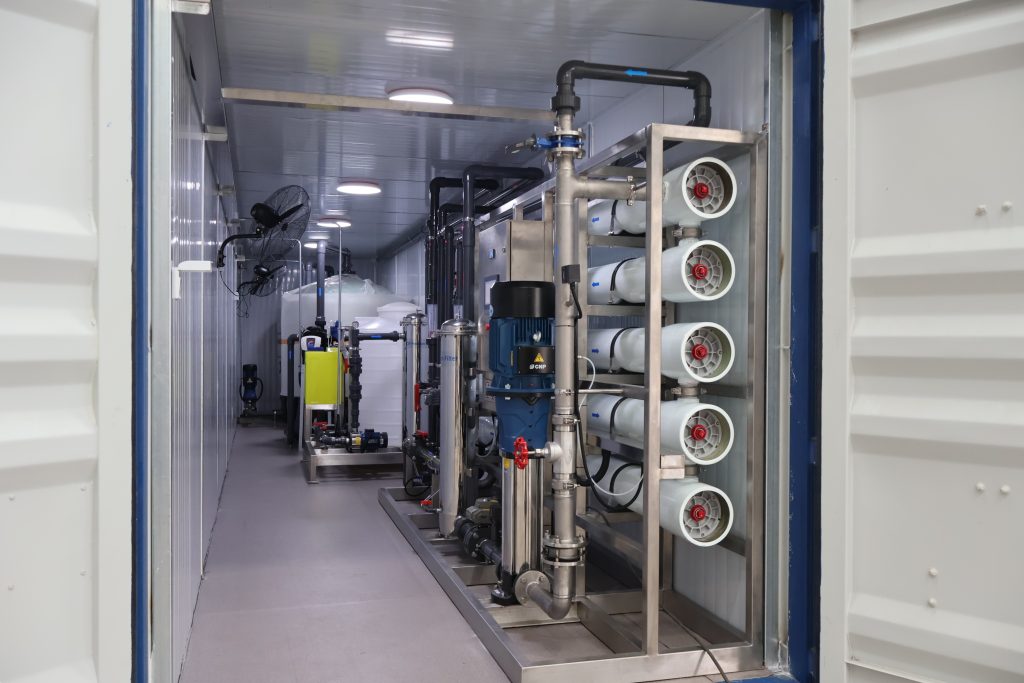
Containerized water treatment plants are compact, modular systems designed to efficiently purify water from diverse sources. Making them increasingly important in today’s fast-paced and environmentally conscious world. These systems are highly adaptable and rapidly deployable. Often, utilizing standard shipping containers to house pre-assembled treatment technologies. They are used in diverse environments, including remote communities, construction sites, and temporary installations. To meet urgent water supply needs and continuous treatment requirements under varying environmental conditions.
The size and specifications of these containerized plants are determined based on several critical factors, including treatment capacity, design configurations, and operating procedures. Treatment capacity is fundamental, as it determines the amount of water the system can treat within a specific timeframe, which can vary considerably depending on the application. Additionally, design considerations, such as sedimentation basins and the integration of advanced technologies like membrane bioreactors (MBRs) and integrated stable membrane activated sludge (IFAS), can impact the physical space and operational efficiency of the plants.
Key controversies surrounding containerized bottled water treatment systems often revolve around maintenance challenges, regulatory compliance, and balancing cost-effectiveness with reliable performance. While these systems offer significant advantages, including reduced installation time and site footprint, they can also encounter issues such as filter clogging and sediment buildup, requiring careful management and monitoring to ensure optimal operation.
Furthermore, understanding local regulatory requirements is crucial for successful implementation, as compliance can significantly impact design and operating costs. With the ever-increasing demand for sustainable water management solutions, containerized bottled water treatment plants are evolving with innovations in treatment technologies and digital integration. These advancements enhance their efficiency, operational effectiveness, and adaptability, making them a key component of modern water treatment strategies aimed at addressing the challenges of climate change, population growth, and increasing water scarcity.
Factors Affecting Size
The size and specifications of a containerized bottled water treatment plant are influenced by various factors that determine its efficiency and effectiveness in water treatment. These factors include treatment capacity, design configurations, and operating procedures.
Treatment Capacity
Treatment capacity is a critical factor when determining the size of a wastewater treatment plant. It is typically measured in the volume of water treated per hour or per day. For example, the treatment capacity of a system designed for a small community might be around 10 cubic meters per hour. An industrial wastewater treatment plant, on the other hand, might require capacities ranging from 50 to 100 cubic meters per hour.
Additionally, it is important to assess the system’s maximum treatment capacity, which refers to the maximum volume the plant can treat over short periods, especially when dealing with fluctuating water quality or variable usage requirements.
Design Configurations
The design and engineering of the treatment units play a significant role in determining plant size. For example, sedimentation and coagulation basins must be carefully designed, as miniaturization is difficult due to the size of the particles being treated. Generally, surface loading rates (SLRs) for full-scale systems exceed 500 gallons per day per square foot, while smaller pilot systems should be operated at lower rates to avoid excessively deep basins. The length-to-width (L:W) ratio typically ranges from 2:1 to 5:1, impacting the overall plant area.
Operational Processes
Bottled water treatment plants utilize a variety of processes that can influence their size. Common processes include physical, biological, chemical, and electrochemical treatment methods. Each process has specific operational units that require space and infrastructure, affecting the overall plant design and size. Advanced technologies, such as integrated stable membrane activated sludge (IFAS) and membrane bioreactors (MBRs). It can reduce the environmental footprint by increasing biomass concentration or facilitating biofilm adhesion. This leads to potential savings in land costs and capital expenditure (CAPEX).
Environmental Conditions
Environmental factors, such as temperature and local climate, can also affect the operational efficiency of treatment processes and, consequently, the design and size of the water treatment plant. For example, treatment efficiency may vary with temperature fluctuations, necessitating adjustments to plant specifications to maintain optimal performance.
Read more about containerized bottled water treatment plants as a smart infrastructure strategy.
Design Considerations
Material Selection
When designing a containerized bottled water treatment plant, material selection is crucial to ensuring operational efficiency and longevity. Materials used in the construction of rapid mixing, coagulation, and sedimentation chambers must be inert to prevent organic leaching. That can negatively impact water quality. While glass offers visual clarity, its fragility and installation difficulties make polymethyl methacrylate (PMMA) a preferred alternative due to its durability and ease of use. PMMA is typically manufactured in 0.5-inch thicknesses and can be molded into containers with sides measuring one foot. However, care must be taken to ensure that joint adhesives and bonding materials do not release harmful organic compounds into the water system.
Compact and Installable Design
Containerized water treatment plants are designed with a compact, modular approach and are often housed in standard shipping containers (10-foot, 20-foot, or 40-foot). This allows for immediate operation, as the units are fully assembled and tested at the factory before delivery. They require only basic on-site connections for immediate use. These designs are particularly advantageous for projects with tight deadlines or in remote locations. Making them adaptable to both temporary and permanent installations. The modular structure also facilitates easy and cost-effective expansion, allowing systems to be customized to meet customer needs and regulatory standards.
Building Material Quality
The choice of building materials not only affects the cost but also the operational efficiency of the treatment plant. In environments with high flow rates, extreme temperatures, or high concentrations of corrosive chemicals, durable materials are an ideal choice. While investing in high-quality materials may increase initial costs. It often results in lower maintenance, repair, and replacement expenses over time. Conversely, for less demanding applications, the opposite may be true. Simpler and less expensive materials, such as polyvinyl chloride (PVC) pipes, may suffice.
Regulatory Compliance
Design considerations must also take into account regulatory requirements, which vary by industry and location. Compliance with industry standards influences the overall design and can significantly impact construction costs. Especially for facilities like pharmaceutical wastewater treatment plants that must adhere to strict pollutant limits. Understanding these regulatory environments is essential to ensure the design meets all necessary health, safety, and environmental protection requirements.
Operational and Maintenance Scheduling
An effective operational schedule is vital to the success of a containerized water treatment plant. Detailed planning involves preparing comprehensive system design documentation, maintenance schedules, and operator responsibilities. This planning phase should also include operator training to ensure they understand maintenance requirements and can effectively handle any issues that may arise. A well-structured maintenance program not only improves operational quality but also ensures adherence to performance standards. By considering these design elements, engineers can create efficient and effective containerized water treatment systems that comply with regulatory standards and are adaptable to future needs.