

A 300 m³ Reverse Osmosis Plant Success Story for Cactus Farms in Al-Kharj
In light of the ambitious strategic directions of the Kingdom of Saudi Arabia within Vision 2030, the issue of “water security” has emerged as a sovereign and essential pillar for supporting the sustainability of the agricultural sector, which is the backbone of food security and the national economy. With the accelerating pace of climate change and the scarcity of traditional water resources, the biggest challenge facing investors in this sector has become how to balance production expansion with water conservation. Reliance on raw groundwater sources is no longer sufficient or safe to guarantee crop quality and global competitiveness, especially in the Kingdom’s agricultural heartland, such as Al-Kharj, which is witnessing a major agricultural and technological renaissance that makes water quality a decisive factor in the success or failure of any project.
From this perspective, CareWater stands out not only as a service provider but also as a strategic partner for farmers and investors. The company adopts an advanced engineering approach that goes beyond the traditional concept of equipment supply. We believe that every drop of water is a precious resource that requires smart technological solutions. Therefore, we design and build integrated and customized treatment systems for each site, ensuring that water challenges are transformed into sustainable growth opportunities. This is clearly demonstrated in our pioneering 300 cubic meter per day plant project dedicated to cactus farms, which has made a significant difference in production standards and water sustainability.
An important article that explains in more detail what reverse osmosis technology is.
Water Challenges in the Al-Kharj Region
Historically and geographically, the Al-Kharj region is considered the most important “food basket” for the central region of the Kingdom, due to its vast areas and fertile soil. However, farmers there face a chronic challenge that threatens their investments: the sharp fluctuations and increasing rise in the total dissolved solids (TDS) content of groundwater. This rise is not merely a technical obstacle, but a strategic risk. Salt accumulation leads to soil salinization and a decline in fertility over the long term, in addition to causing significant mechanical damage to modern irrigation networks, such as emitter blockage and pump corrosion. This weakens the plant’s ability to absorb vital nutrients and reduces the quality of the final crop.
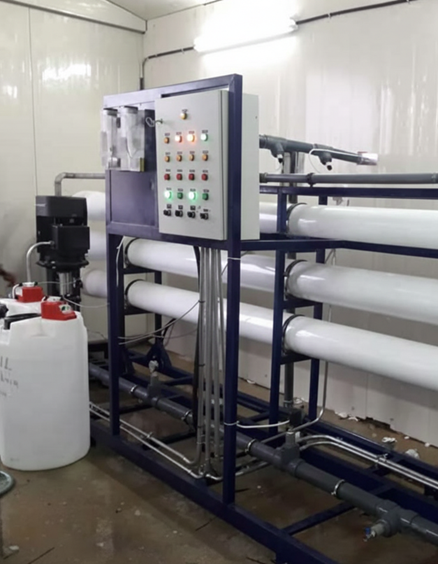
In our recent pilot project at the Al-Kharj Cactus Farms, we set a clear engineering objective to address this challenge: to build an advanced system capable of treating highly saline well water and converting it into fresh, pure water that meets the highest international standards for advanced irrigation and sustainable hydroponics. This station was designed with a massive production capacity of up to 300 cubic meters per day, carefully balancing the preservation of essential micronutrients with the removal of harmful salts. This creates an ideal growing environment for cactus, ensuring abundant production and protecting agricultural assets from chemical damage, thus achieving the equation of “maximum production with minimal resources.”
Station Technical Specifications: Reverse Osmosis (RO) Technology
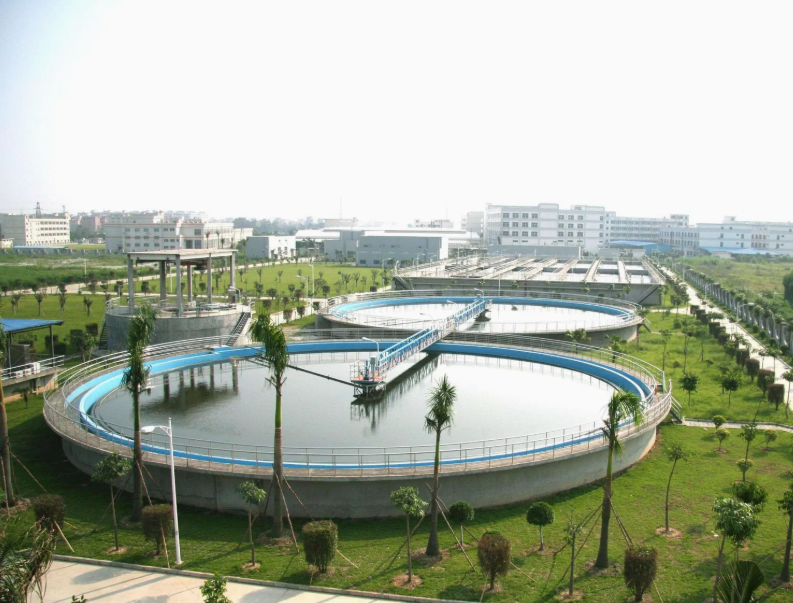
The station was designed based on a thorough study of the raw water characteristics at the site. The station consists of several interconnected technical units:
- Pretreatment Unit: Includes sand and cotton filters to remove suspended impurities that could damage the membranes.
- Reverse Osmosis System: The heart of the station, it utilizes high-quality membranes that precisely separate salts and heavy metals.
- Smart Control Panel: A fully automated system that monitors water pressure, flow levels, and salinity in real time, ensuring safe operation with minimal human intervention.
- Chemical Injection Unit: Used to treat the water and ensure the pH balance is optimal for the cactus plant.
Why Catus Farms? The Economic Value of Treated Water
Some might think that a cactus is a desert plant that doesn’t require treated water, but modern agricultural practices prove otherwise. Cactus intended for the production of gels or medicinal and cosmetic extracts is highly sensitive to water quality.
- Faster Growth: Low-salinity water accelerates the plant’s life cycle.
- Higher Final Product Quality: Increased fiber density and purity of the gel within the cactus leaves enhance its export value.
- Protecting assets: Extending the lifespan of the drip irrigation system and preventing salt buildup inside the pipes.
Technical Comparison: Raw Well Water vs. Water from the “CareWater” Plant
| Comparison Points | Traditional Well Water (Al-Kharj) | Water from the “CareWater” Plant (300 m³) | Impact on the Farm |
| Total Dissolved Solids (TDS) | May exceed 3000-5000 ppm | Adjusted as needed (e.g., 200-500 ppm) | Protection of Soil from Salinization |
| Irrigation Efficiency | Frequent Drip Irrigation Blockage | Smooth and Continuous Flow | 60% Reduction in Maintenance Costs |
| Plant Growth | Slow Growth and Salt Stress | Vigorous Growth and High Yield | Up to 40% Increase in Yield |
| Energy Consumption | High Due to Pump Sedimentation | High Efficiency Thanks to Engineering Design | Electricity Bill Savings |
Implementation Stages: From Plan to Reality
At “CareWater” we believe that every drop of water has an engineering story. The journey of the 300 m³ water treatment plant began with meticulous stages:
First: Engineering Analysis
We didn’t simply install a ready-made plant. Instead, we analyzed water samples in our laboratories to determine the type of membranes most resistant to the desert climate of Al-Kharj.
Second: Custom Design
The plant’s metal structure was designed using rust- and corrosion-resistant materials. Ensuring easy access to spare parts and allowing for routine maintenance without prolonged production downtime.
Third: Installation and Training
After installation, our engineering team trained the farm staff on how to read the control panels and perform periodic chemical cleaning of the membranes, guaranteeing the plant’s 100% efficiency for many years.
Environmental Sustainability and Social Responsibility
The benefits of the plant extend beyond the economic aspect. This extends beyond the immediate environmental impact. Through our advanced technologies, we strive to minimize the amount of raw water and ensure its management in a way that does not harm the surrounding groundwater, making the project a model for sustainable agriculture.
Return on Investment (ROI): How does the plant transform from a cost to a sustainable profit?
Establishing a desalination plant with a capacity of 300 cubic meters per day should not be viewed as merely a capital expenditure, but rather as a long-term strategic investment that directly impacts the farm’s operational profitability. At the CareWater Establishment, we design our solutions to ensure a rapid payback period through three key pillars. The first pillar is reducing maintenance and replacement costs. Treated water completely eliminates the problem of drip emitter blockage and pump corrosion, saving thousands of riyals that were previously spent annually on spare parts and labor to repair irrigation networks damaged by salts and limescale.
The second pillar lies in the efficiency of agricultural inputs; Purified water enhances the effectiveness of fertilizers and pesticides dissolved in it. Meaning the plant absorbs maximum nutrients with minimal fertilizer. This directly reduces agricultural procurement costs by up to 25%. The third and most important aspect is the qualitative and quantitative growth of the crop. Larger, more gel-rich cactus leaves open doors to contracts with major pharmaceutical and cosmetic companies at preferential prices. The difference in the selling price of the crop, combined with savings in operating costs, makes the reverse osmosis plant a self-sustaining project. It quickly becomes a net source of profit and increases the overall market value of the farm.
Read also: The Importance of Reverse Osmosis and Water Treatment Systems for Agriculture
Conclusion: An Investment in the Future
The 300 m³ water treatment plant project at the cactus farms in Al-Kharj is not merely a technological addition. It’s an investment in the farm’s future. Water is the driving force behind any agricultural activity, and without proper treatment, agricultural investment remains at risk.
CareWater is proud to be the mastermind behind this success and invites all farm owners and investors in the agricultural and industrial sectors to benefit from our extensive experience in designing and operating desalination and water treatment plants.
Are you considering upgrading your farm’s water system?
Contact our technical team today for a customized case study and engineering solutions that guarantee the highest return on investment. Remember: We don’t just sell equipment; we design a sustainable water future.