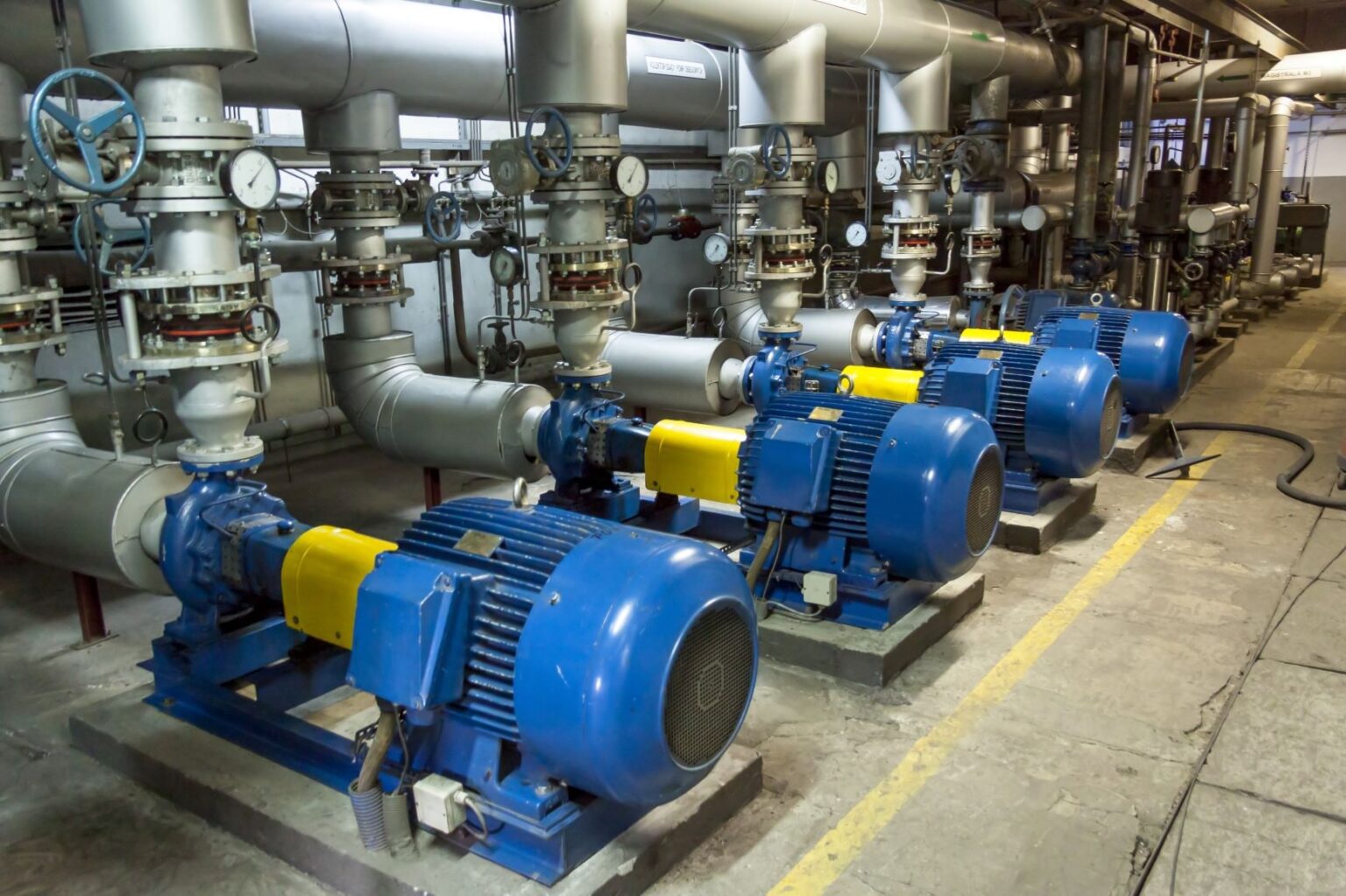


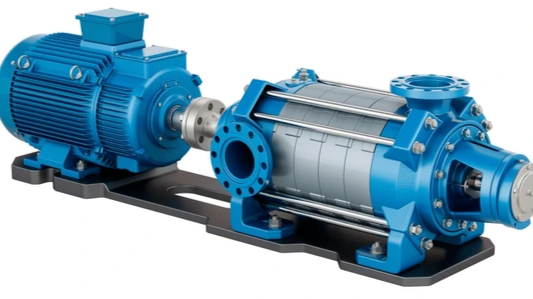
The Comprehensive Guide to Pump Optimization Strategies: Performance Efficiency and Operational Sustainability
Pumping systems are the lifeblood of many industrial facilities and water treatment plants. With increasing global pressure to reduce energy consumption and lower carbon emissions, improving pump efficiency has become an economic and environmental necessity, not just a technical option. Achieving optimal efficiency requires a deep understanding of the interaction between the characteristics of the hydraulic pump and the mechanical requirements of the system.
First: Pump Performance Optimization Strategies
To achieve efficiency that meets flow and pressure requirements, a multi-pronged approach that goes beyond simply selecting the pump is necessary:
Installation of Variable Speed Drives (VFDs/VSDs)
This technology is one of the most effective solutions. Instead of operating the pump at a constant speed and throttling the flow with valves (which wastes a significant amount of energy), variable speed drives allow for precise adjustment of the rotational speed to match the actual needs. According to the Laws of Affinity, a small reduction in speed results in a cubic percentage reduction in energy consumption.
Impeller Trimming
In cases where the pump is consistently larger than the system requires, trimming or reducing the impeller diameter is an ideal solution for adjusting the operating point without replacing the entire pump. This reduces excess pressure, noise, and vibration.
Parallel Operation and Multiple Pumps
Using several small pumps operating in parallel, instead of one large pump, provides the system with greater flexibility. Only the number of pumps needed to meet the immediate demand can be operated, keeping each pump close to its maximum efficiency point (BEP).
Read also: The Role of Pumps in Water Treatment Plants
Second: Cost Analysis and System Lifecycle (LCC)
Many believe that the purchase price of the pump is the most significant cost, but the reality is quite different.
Cost Allocation
Studies show that the purchase price represents only about 10% to 15% of the total pump lifecycle costs over 20 years. While electrical power accounts for approximately 40% to 60% of the system’s energy consumption, the remaining percentage is allocated to maintenance and operation.
Importance of Initial Design
Choosing a pump incompatible with the system’s operating curve leads to:
- Increased energy consumption: The pump operates far beyond its BEP (Base-Effect Pitch).
- Shortened bearing and seal life: Due to unbalanced hydraulic forces.
- Downtime costs: Losses resulting from production downtime far outweigh the cost of spare parts.
Third: Proactive Maintenance and Lifetime Management
Efficiency and maintenance are inseparable. A neglected pump can lose up to 10-25% of its original efficiency within a few years.
Effective maintenance programs include:
- Vibration monitoring: To detect misalignment or bearing wear before a catastrophe occurs.
- Clearance checks: Excessive clearance between the impeller and wear rings leads to internal leakage, reducing hydraulic efficiency.
- Lubrication: To ensure minimal mechanical friction in the motor and pump.
Fourth: The Technological Revolution and the Internet of Things (IoT)
We have moved from the era of “repairing when it breaks down” to the era of “predicting breakdowns before they occur.”
Predictive Maintenance
By integrating smart sensors that measure flow, pressure, temperature, and vibration, the data is sent to a cloud for analysis. Advanced algorithms can inform the operator that a pump will “break down” in two weeks if it continues at its current rate, allowing for scheduled maintenance without impacting production.
Augmented Reality (AR) and Remote Monitoring
Field technicians can use AR headsets to receive real-time repair instructions from experts on another continent, or see “live data” of the pump floating above the device during inspection, accelerating repairs and reducing human error.
Fifth: Energy Efficiency and Environmental Sustainability
In water treatment plants, pump energy consumption represents the largest portion of operating costs.
- Improved Impeller Designs: Using Computational Fluid Dynamics (CFD) to design impellers that reduce turbulence and eddies within the pump.
- High-efficiency motors (IE3 & IE4): Replacing older motors with highly efficient ones reduces energy loss and converts it into heat.
Sixth: Advanced Materials and Corrosion Resistance
Harsh environments, such as sewage or chemical liquids, require materials beyond traditional cast iron:
- Stainless steel: for resistance to chemical corrosion.
- Ceramic coatings: used to line the pump’s interior, reducing surface friction and increasing efficiency by up to 3%, in addition to protecting the metal from corrosion.
- Composites: characterized by their lightweight nature and very high chemical resistance, which extends equipment lifespan in harsh conditions.
Seventh: Improved Operation and Automation
Operational strategies have evolved to include “artificial intelligence in pumping”:
- SCADA (Supervisory Control and Data Acquisition) systems: these systems monitor reservoir levels and network pressure and automatically determine which pumps to operate and at what speed.
- Flow Coordination: During peak periods, pumps are operated in a coordinated manner to prevent water hammer, which can damage pipes, and to ensure stable pressure for the end consumer.
Eighth. Common Flaws in Pumping Systems (and How to Avoid Them)
Despite technological advancements, recurring design and implementation errors still lead to significant energy waste and reduced equipment lifespan. Understanding these flaws is the first step toward sound engineering practices.
The Over-Sizing Trap
Oversizing pumps is one of the most common problems in mechanical engineering. Designers often add a safety margin when calculating the required flow and pressure, and then the contractor adds another margin, resulting in a pump that is larger than expected by 20% to 50% of the actual requirement.
- Resulting damage: Operating a large pump at low flow rates forces it to work far beyond its maximum efficiency point (BEP). This leads to increased thermal load, excessive bearing vibrations, and unnecessary energy consumption.
- How to avoid this: Accurate hydraulic calculations for the piping system must be performed. If future demand is likely to change, variable speed drives (VFDs) are preferable to choosing a large pump and stifling its performance with valves.
Neglecting system resistance design
The pump is not an isolated unit; it is part of a “hydraulic circuit.” Many engineers focus on the pump’s efficiency itself and ignore the system’s resistance.
- Fatally serious mistakes: Using pipes with a smaller diameter than necessary to reduce installation costs, or using too many elbows (90 degrees) and valves near the pump inlet. This creates what is called “flow turbulence,” which increases energy consumption to overcome friction.
- How to Avoid It: Follow hydraulic design standards that recommend the straight pipe length before the pump inlet be at least 5 to 10 times the pipe diameter, and use wide-curved elbows to minimize friction losses.
Cavitation: The Silent Killer
Cavitation occurs when the pressure at the pump inlet (or behind the impeller vanes) drops below the fluid’s vapor pressure, causing vapor bubbles to form and burst violently as they travel to high-pressure areas.
- Destructive Effects: The pump makes a grunting noise, and the impeller vanes develop microscopic pitting that leads to rapid metal erosion and a sharp decrease in flow rate.
- How to Avoid It: Calculate the available net positive suction head (NPSHa) and ensure it is always greater than the required net suction head (NPSHr) of the pump by a sufficient margin. Also, avoid placing the pump too high above the fluid source or using excessively long suction pipes.
Operating Outside the Hydraulic Stability Range
Pumps operate optimally within a specific range around their maximum efficiency point. Operating at very low flow levels (near the shutdown point) causes fluid backflow within the pump and generates high heat, which can damage mechanical seals.
Solution: Install bypass valves to ensure a minimum fluid flow to protect the pump in case of a sudden drop in demand, or use intelligent control systems that shut down the pump when the flow reaches critical levels.
Misalignment Between Motor and Pump
Even with a perfect pump, any slight misalignment between the motor shaft and the pump shaft results in energy loss as heat and vibration.
- Result: Rapid bearing wear and sudden coupling failure.
- Solution: Use laser alignment techniques during installation and after each routine maintenance to ensure the highest possible mechanical efficiency in power transmission. Summary:
The Path to Operational Excellence
Improving pump efficiency is not a one-time technical fix, but an ongoing operational culture. By integrating mechanical strategies (such as impeller and speed adjustments) with modern digital solutions (such as the Internet of Things and artificial intelligence), organizations can achieve the formula for success: lower energy consumption + longer equipment lifespan + lower maintenance costs. Investing today in optimization technologies pays off tomorrow in the form of operational stability and significant cost savings, contributing to enhanced industrial competitiveness and the protection of environmental resources for future generations.