

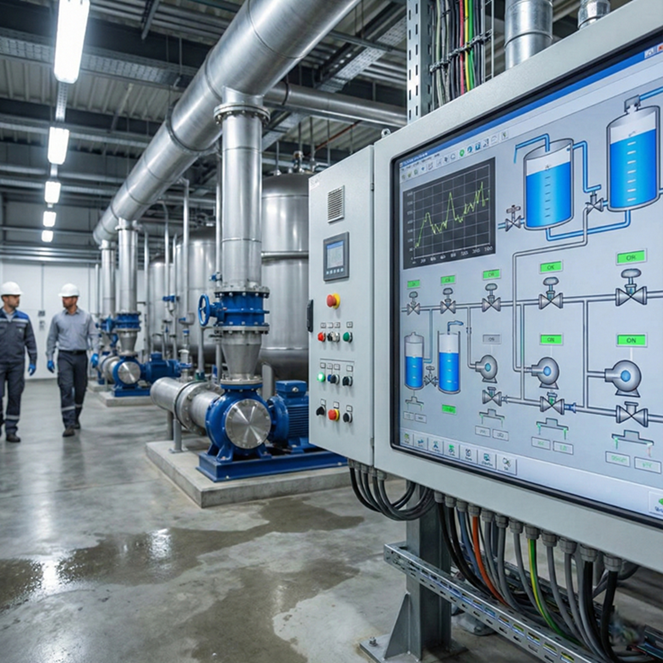
is The Importance of Control Panels in Water Treatment Applications
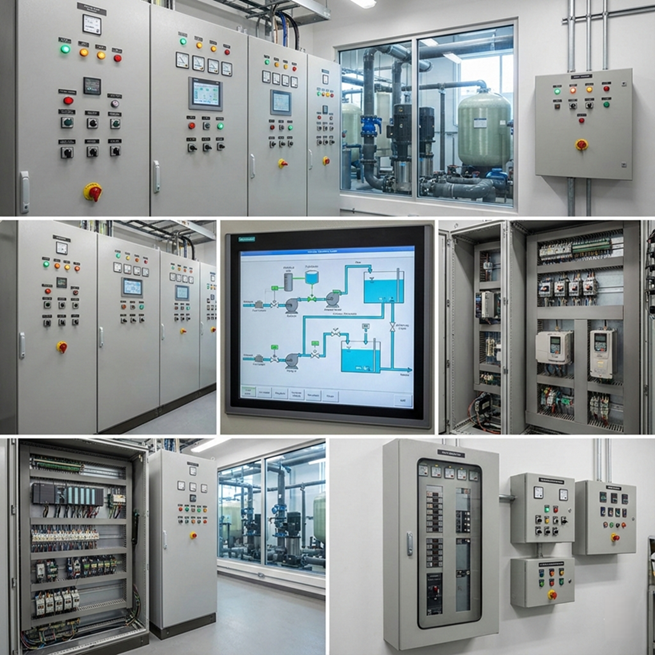
Water treatment control panels play a crucial role in managing various aspects of the treatment process. This includes determining chemical dosages, water flow, and overall water quality, thus ensuring process efficiency. These control systems are particularly essential in municipal and industrial water treatment facilities, where they are integrated to enhance automation and monitoring capabilities.
Automation and Efficiency
The primary objective of implementing automation in water treatment plants is to improve the efficiency, accuracy, and reliability of treatment processes. Automated systems enable real-time monitoring and adjustment of critical parameters, minimizing human error and enhancing operational effectiveness.
For example, Programmable Logic Controllers (PLCs) and Distributed Control Systems (DCS) are commonly used to automate tasks such as raw water pretreatment, coagulation, sedimentation, and disinfection, ensuring optimal treatment conditions are maintained throughout the process.
Environmental Impact and Resource Conservation
Efficient water treatment facilities contribute significantly to environmental conservation by reducing the risk of untreated wastewater entering natural water bodies, which can lead to pollution and health hazards.
Advanced treatment methods, including filtration and advanced oxidation, help reduce the emission of harmful pollutants, such as nitrogen and heavy metals, into the environment.
Water recycling through wastewater treatment processes also allows for the reuse of treated wastewater for irrigation and industrial cooling, conserving freshwater resources and reducing overall water consumption.
Real-Time Monitoring and Control
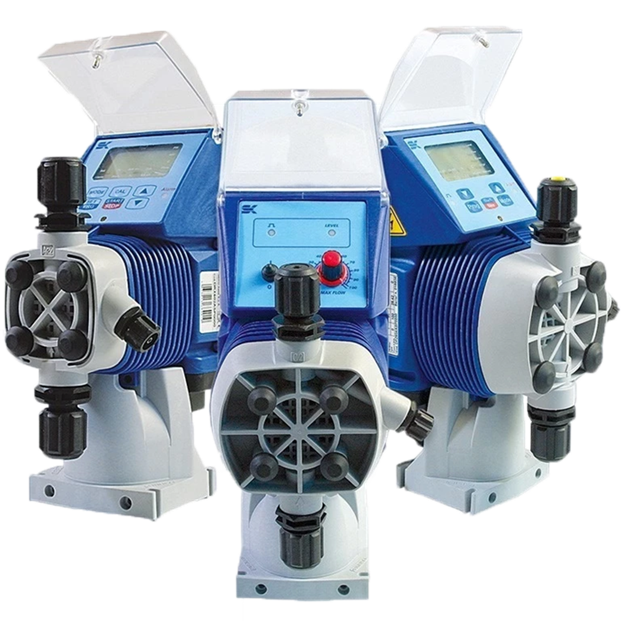
Control panels facilitate real-time monitoring of water quality parameters, such as pH levels, ensuring that treated water meets safety standards before discharge or reuse. Automated control systems can adjust chemical dosages based on continuous water quality readings, improving treatment efficiency and preventing problems such as secondary pollution.
Read also: Types of Control Panels in Water Treatment Plants
Challenges and Innovations
Despite the advantages of automation in water treatment, challenges remain, including maintaining system efficiency and meeting the specific needs of different treatment processes. For example, ensuring pumps operate at maximum efficiency is crucial, as inefficiencies can lead to increased operating costs and reduced performance. The adoption of technological innovations, such as continuous online monitoring methods, is increasing to enhance the accuracy of water treatment processes.
Benefits of Water Treatment Control Panels
Control panels play a vital role in the efficiency and reliability of water treatment plants. They act as command centers that manage various aspects of the treatment process, yielding numerous benefits.
Energy Efficiency and Cost Reduction
One of the most significant advantages of water treatment control panels is their ability to improve energy efficiency. Through effective management of chemical dosages, water flow, and quality control, these panels significantly reduce energy consumption and operating costs.
The integration of advanced technologies, such as the Internet of Things (IoT) and artificial intelligence (AI), further enhances this efficiency by automating processes and minimising human error, leading to cost savings and improved productivity.
Improved Monitoring and Automation
Control panels enable the automation of water treatment processes, improving accuracy and reliability. Automation also allows for real-time monitoring of equipment and processes, enabling rapid response to abnormal conditions. This capability is essential for maintaining operational continuity in wastewater and freshwater systems, as any disruption can negatively impact city operations. Furthermore, automated reporting and compliance tools streamline inspections and audits, ensuring facilities adhere to regulatory standards.
Improved Safety and Reduced Labor
The use of control panels enhances the safety of water treatment operations. Automated systems can perform routine checks and monitoring tasks, reducing the need for manual inspections that can pose risks to workers.
By minimising the need for personnel in potentially hazardous environments, control panels contribute to safer working conditions while enabling operators to focus on more complex issues that require human expertise.
Data Management and Predictive Maintenance
Control panels also facilitate advanced data management, providing operators with valuable insights into system performance. By analysing data trends, facilities can identify opportunities for improvement and implement predictive maintenance strategies that address equipment problems before they escalate. This proactive approach not only enhances reliability but also contributes to sustainable practices by promoting water conservation and reducing waste.
Scalability and Centralised Control
With the advent of cloud-based control systems, control panels can manage multiple sites and systems from a single dashboard. This centralised control enables faster, data-driven decision-making and a clearer view of operations, leading to more efficient water management practices.
The ability to access real-time data remotely allows teams to maintain high levels of efficiency, even with limited on-site presence, as was the case during the COVID-19 pandemic.
Challenges and Considerations
Water treatment facilities face numerous challenges that impact their operational efficiency and compliance with regulatory standards. Understanding these challenges is essential for effective management and optimisation of water treatment processes.
Energy Consumption and Costs
High energy consumption is a major challenge for water treatment facilities, directly contributing to operating costs. Facilities must find ways to reduce energy use while maintaining the efficiency of their treatment processes. Strategies include common practices, such as optimising pump and blower cycles based on actual process conditions to minimise unnecessary energy expenditure.
Sludge Management
Sludge management is a critical issue in wastewater treatment plants. The Sludge treatment and disposal can be costly and logistically challenging, increasing operational burdens. Effective management strategies are therefore essential to mitigate these challenges, including developing innovative solutions tailored to each facility’s specific needs.
Operator Skills and Competence
Operator skills and competence are critical to ensuring project success and the smooth operation of treatment systems. Issues such as operator fatigue, shift changes, and simple miscalculations can lead to operational errors, including incorrect chemical dosing and improper equipment handling.
To mitigate these risks, facilities can implement automation technologies that reduce reliance on human oversight while ensuring consistent operational performance.
Regulatory Compliance
Compliance with stringent regulatory requirements is another challenge for wastewater treatment facilities. Adherence to these regulations is crucial to avoid hefty fines and protect the facility’s reputation. Periodic inspections and independent assessments can help ensure compliance while identifying areas for improvement.
Space and Facilities
The physical space of wastewater treatment plants presents additional challenges. Facilities must operate within a limited area while managing various components, including treatment tanks, control panels, and storage areas. Integrating advanced automation and control systems can enhance operational efficiency and space utilisation, helping to address this challenge.
Improvement Considerations
Automation and Control Technologies
Adopting automation technologies, such as programmable logic controllers (PLCs) and supervisory control and data acquisition (SCADA) systems, can significantly improve operational efficiency. These systems facilitate reliable monitoring and control, reducing the potential for human error and improving data clarity for performance reviews and audits.
Partnering with Specialists
Collaborating with independent specialists can provide valuable insights and tailored solutions to address deficiencies in treatment facilities. These experts can conduct comprehensive analyses and guide facilities toward achieving regulatory compliance while maximising operational efficiency.
Continuous Improvement and Maintenance
Ongoing maintenance and upgrades are essential for the effective operation of automated systems. Periodic inspections and software updates ensure that treatment processes are continuously improved, keeping pace with technological advancements and evolving regulatory requirements. Collaboration among all stakeholders, including owners, design firms, and equipment suppliers, is critical to maintaining quality and performance.
Regulatory Pressures and Emission Reporting
With increasing awareness of the climate impact of wastewater, regulatory and voluntary pressures are mounting on utility companies to accurately measure and reduce their emissions. Many countries now include wastewater emissions in their national greenhouse gas inventories, in accordance with the Intergovernmental Panel on Climate Change (IPCC) guidelines for estimating these emissions. This includes a focus on emissions in ranges 1, 2, and 3: direct emissions from processes, indirect emissions from purchased energy, and emissions across the supply chain, respectively.
In particular, the revised EU Directive on Urban Wastewater Treatment aims to achieve energy neutrality in wastewater treatment plants by 2045, while other countries have set ambitious greenhouse gas targets, pushing utilities toward carbon neutrality.
Challenges and Opportunities
Wastewater treatment presents significant environmental challenges and opportunities for decarbonization. The sector is responsible for hundreds of millions of tons of CO2 equivalent annually. Energy use expected to increase as countries expand their sanitation services. However, technologies already exist that enable the conversion of wastewater treatment plants into low-carbon, energy-efficient systems, including biogas capture and nutrient recycling, reducing emissions and enhancing service resilience and cost-effectiveness.
By integrating emissions considerations into planning, operations, and policies. The wastewater treatment sector can evolve into a central component of climate-resilient infrastructure, benefiting both the environment and communities.