

Fire Hydraulics: A Key Investment in Modern Shopping Mall Design
Fire hydrants are a fundamental element in modern shopping mall design, representing a crucial investment in fire safety and emergency preparedness. Their strategic placement and effective functionality not only protect customers and employees during emergencies but also enhance the overall safety infrastructure of commercial spaces. Given that shopping malls often attract large crowds and feature complex layouts, integrating fire hydrants is essential for ensuring rapid emergency response, minimizing potential fire damage, and complying with safety regulations.
Fire hydrants have undergone significant evolution since their introduction to American cities in the early 19th century, progressing from simple pipe installations to sophisticated systems designed to meet diverse firefighting needs. Today, the focus has shifted toward multi-functional fire hydrants, with designs that address both fire-related emergencies and everyday public water supply, reflecting a broader commitment to community safety and urban resource management.
The History of Fire Hydraulics
Fire hydrants have a long history, dating back to their first appearance in American urban areas in 1801. Initially designed as simple pipe connections with a water-dispensing mechanism, they have undergone various modifications and innovations to improve their efficiency and ease of use in firefighting. The basic design of a fire hydrant has remained largely unchanged. It consists of a valve system that allows access to a water source, typically connected to the city’s drinking water network.
Evolution and Improvement
The two main types of fire hydrants—dry hydrants and wet hydrants—reflect the evolution of hydrant design in response to climatic needs. Dry hydrants, which prevent freezing by positioning the main valve below the water’s freezing point, became essential in cold climates. In contrast, wet hydrants, which keep the valve submerged in water, are commonly found in warmer regions where freezing is not a concern.
As firefighting needs evolved, so did hydrant design. Innovations such as connectors have been introduced to facilitate the rapid connection of fire hoses, improving emergency response efficiency. Despite their simple appearance, fire hydrants are an integral part of urban infrastructure and require regular maintenance and easy access to operate effectively during emergencies.
Contemporary Considerations
In recent years, the design and function of fire hydrants in urban environments have been reimagined. Concepts such as multi-functional fire hydrants have emerged, combining the traditional role of firefighting with the provision of public water, thus addressing both emergency and everyday needs within communities.
This shift reflects a broader understanding of structural elements as civic resources that can enhance public life, demonstrating the potential of design to elevate everyday objects to serve multiple purposes.
Fire Hydraulics in Shopping Mall Design
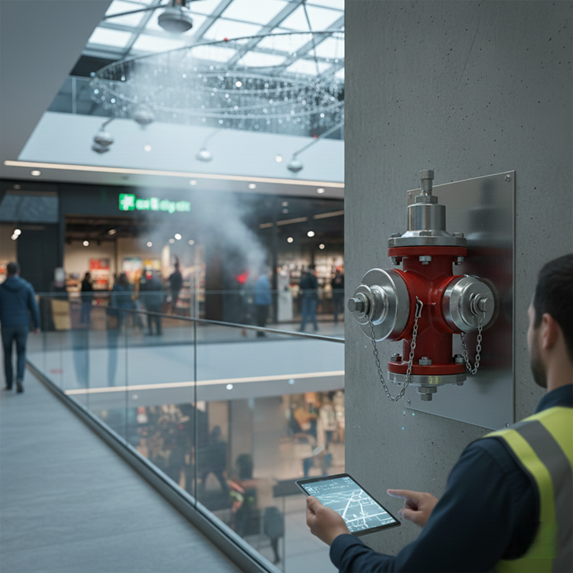
Fire hydrants play a crucial role in enhancing fire safety measures within shopping malls. Their strategic placement and efficient design are vital to ensuring rapid response during emergencies, thereby protecting the safety of customers, employees, and property.
The Importance of Fire Hydrant Systems
The installation of fire hydrant systems in shopping malls is subject to specific regulations that emphasize public safety and emergency response capabilities. These systems not only provide essential access to water for firefighting but also contribute to the overall safety infrastructure of the mall. For optimal performance, fire hydrants must be easily accessible and clearly marked, allowing emergency teams to locate them quickly.
Read also: Fire Hydrant Standards in Saudi Arabia
Main Components
A well-designed fire hydrant system consists of several essential components, including:
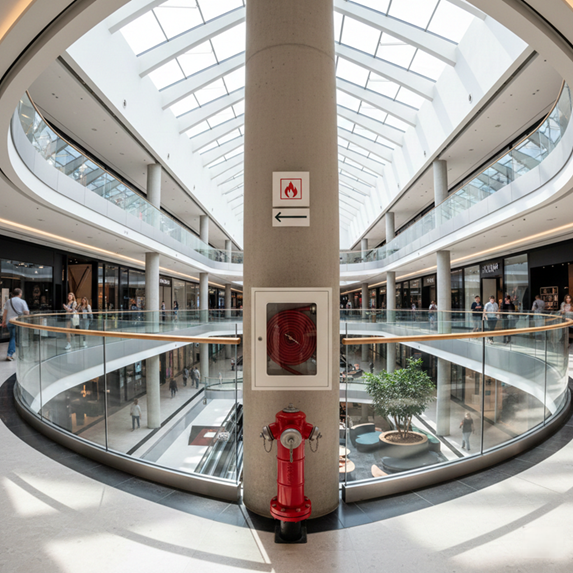
- Fire Hydraulics: These are the core elements of the system and include nozzles, outlets, valves, and hose connection points. These components must be robust and strategically distributed throughout the mall to ensure easy access in fire emergencies.
- Hoses: These hoses connect to the fire hydrants and are essential for delivering water to extinguish fires. Hoses are made of durable, heat-resistant materials and must be of a suitable length and diameter to reach all areas of the shopping center.
- Hose reels: These devices are used to store and deploy fire hoses and are typically mounted on walls or inside cabinets for easy access.
- Signs and markings: Clear indicators are essential to guide firefighters and emergency crews to the nearest fire hydrants and associated equipment during emergencies.
- Installation and maintenance: Proper installation of fire hydrants requires careful planning, including a site assessment to determine optimal locations based on the building design and water supply coordination.
Compliance with local building codes and safety regulations is crucial to ensuring the effective operation of fire hydrants in emergencies. Regular maintenance and inspections are necessary to ensure fire hydrants are operational, leak-free, and easily accessible.
Periodic testing of water pressure and flow rates is also required to ensure fire hydrants meet approved design specifications. This ongoing assessment not only maintains system reliability but also enhances confidence in its operational readiness during fire incidents.
Staff Training and Emergency Response Plans
Training mall staff and security personnel on fire prevention procedures is an integral part of the process. Fire safety is a fundamental aspect of maintaining fire safety. Developing an Emergency Response Plan (EAP) that outlines evacuation and response procedures in the event of a fire is crucial to ensuring the safety of all occupants of the shopping center. Dedicated fire officers should be assigned to lead these efforts and coordinate training activities to enhance preparedness for fire emergencies.
Fire Safety Design Considerations
Designing fire safety systems for shopping centers requires a thorough analysis of multiple factors, including smoke control systems and construction methods. Fire safety systems must be adaptable to the specific conditions of each project to ensure their effectiveness. It is essential to design these systems considering factors such as wind effects, maximum potential impacts of chimneys, and buoyancy caused by fire conditions.
Furthermore, the placement of fire hydrants is critical to enhancing fire response capabilities. Research indicates that fire hydrants should be strategically positioned at appropriate distances to ensure comprehensive coverage. In Los Angeles, for example, the distance between fire hydrants should not exceed 300 feet. While some recommendations advise against placing them more than 1,000 feet from commercial properties to improve water access during emergencies.
Benefits of Fire Hydraulics in Shopping Malls
Fire hydrants play a pivotal role in enhancing fire safety measures within shopping malls, which are inherently prone to fires due to high visitor traffic, the presence of flammable materials, and complex designs. A comprehensive fire hydrant system is essential for providing a rapid and effective water supply during emergencies.
Enhancing Safety and Security
Installing high-quality fire hydrant systems significantly contributes to the safety of customers and employees, and builds trust among visitors. Shopping malls equipped with a clear and well-maintained fire safety infrastructure reassure shoppers about their safety, which can lead to increased footfall and higher sales.
Furthermore, the strategic placement and regular maintenance of fire hydrants minimize fire damage and reduce downtime in the event of an incident. This, in turn, helps maintain the financial integrity of the shopping center.
Effective Emergency Response
Fire hydrants facilitate a rapid response to emergencies, allowing fire crews to access water sources without delay. Clear signage and markings indicating the locations of fire hydrants. And related equipment are essential to enable emergency teams to move quickly.
This is particularly critical in shopping centers with complex layouts. Rapid access to firefighting resources can make a significant difference in minimizing damage.
Safety Compliance
The installation of fire hydrants complies with legal requirements aimed at ensuring public safety. Many jurisdictions mandate fire protection systems in commercial buildings, including shopping centers. Regular maintenance and testing of these systems are essential to maintain compliance and efficiency, ensuring effective operation during emergencies.
Cost-effectiveness and insurance benefits
Investing in fire hydrant systems can reduce insurance premiums for property owners. Insurance companies typically offer discounted rates for properties that prioritize fire safety, minimizing fire damage and associated repair costs. Well-maintained fire hydrants contribute to the financial stability of shopping center operators. Furthermore, reliable fire protection systems can help prevent major disruptions to business operations, fostering a more resilient business environment.