

Benefits of Greywater Treatment
The latest greywater treatment technologies refer to innovative methods and systems developed for treating and reusing greywater. This is wastewater generated from sources other than toilets, such as sinks, showers, and laundry. With growing global concerns about water scarcity and environmental sustainability, greywater treatment technologies have emerged as crucial solutions for conserving freshwater resources and promoting sustainable water management practices.
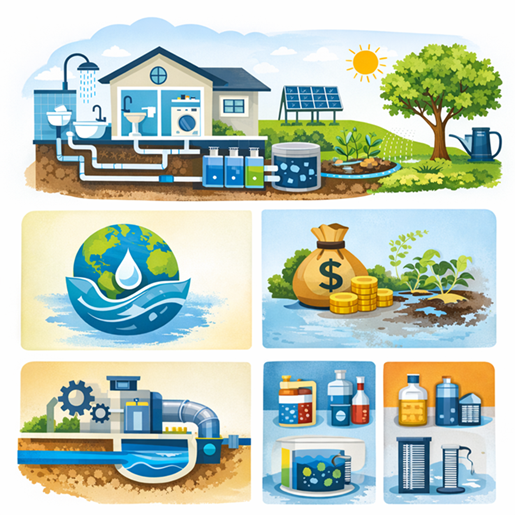
This article provides a comprehensive overview of the latest developments in greywater treatment technologies, categorizing them into physical, chemical, biological, and advanced methods, and discussing their applications, benefits, and challenges. The importance of greywater treatment technology lies not only in its ability to recycle water but also in its capacity to mitigate the environmental impacts associated with traditional wastewater management. Greywater treatment offers a range of significant advantages, including environmental, economic, and operational benefits.
Environmental Benefits
Greywater recycling is an effective water conservation strategy, contributing to a reduction in the demand on freshwater resources. By reclaiming water from sources such as sinks, showers, and washing, greywater treatment reduces reliance on potable water for non-essential uses. This helps conserve freshwater supplies, which are increasingly scarce in many parts of the world, particularly in water-stressed countries like India. Furthermore, using greywater for irrigation and other purposes can improve environmental sustainability and reduce the carbon footprint by decreasing the energy used in water transport and treatment.
Economic Benefits
The economic benefits of greywater treatment systems are significant. Households and municipalities can achieve substantial savings by lowering utility bills due to reduced water consumption. For example, studies have shown that fully domestic greywater recycling systems can reduce irrigation water consumption by 9–19%, with additional savings when greywater is used for toilet flushing.
Moreover, these systems eliminate the need for costly infrastructure upgrades to sewer networks, alleviating the considerable financial burden on municipalities already facing significant challenges in managing stormwater and mixed sewage overflows.
Operational Efficiency
From an operational standpoint, adopting greywater management systems contributes to water conservation within homes or facilities. These systems enable efficient water reuse, reducing the total volume of wastewater produced. By decreasing the flow of water into mixed sewer systems, greywater treatment can alleviate pressure on municipal wastewater treatment plants, ultimately improving operational efficiency and reducing maintenance costs for these systems.
Furthermore, integrating greywater recycling practices encourages sustainable landscaping choices, ensuring optimal water use, particularly in arid regions where outdoor water use is critical.
Greywater Treatment Technologies
Greywater treatment technologies encompass a range of methods designed to treat wastewater from non-toilet sources, such as sinks, bathtubs, and washbasins. With growing concerns about water scarcity and environmental sustainability, these technologies have gained significant importance.
Greywater treatment technologies are crucial for conserving freshwater resources and facilitating their reuse. These can be classified into three main types: physical treatment, chemical treatment, and biological treatment, each targeting different pollutants and offering unique advantages and challenges.
Physical Treatment Techniques
Physical treatment methods focus primarily on removing suspended solids and impurities through techniques such as filtration and sedimentation. Common physical methods include sand filters, gravel filters, and screen filters, which effectively capture large particles such as hair and lint. This often results in a reduction of total suspended solids (TSS) and turbidity exceeding 80%.
However, physical treatment alone is usually insufficient to effectively reduce dissolved organic carbon and nutrients such as phosphorus and ammonia. This necessitates the integration of chemical or biological processes for more comprehensive treatment.
Chemical Treatment Techniques
Chemical treatment enhances the removal of pollutants through the use of coagulants and other chemicals. Coagulation processes, using agents such as calcium hydroxide (Ca(OH)₂) and ferric chloride (FeCl₂), have proven capable of reducing chemical oxygen demand (COD) and biological oxygen demand (BOD) levels by up to 90%.
However, these treatments may complicate downstream processes by altering the pH of the greywater, potentially impacting the effectiveness of subsequent treatment. The effectiveness of chemical treatments is often enhanced when combined with physical methods for removing solids prior to chemical application.
Nevertheless, the efficiency of solids removal may be negatively affected by insufficient biomass formation during aerobic processes, particularly at low oxygen levels. Biological treatments are often used in conjunction with physical and chemical methods to improve greywater management outcomes.
Advanced Treatment Technologies
Recent innovations in greywater treatment have introduced advanced techniques such as membrane filtration, electrocoagulation, and advanced oxidation processes (AOPs). AOPs are characterized by their ability to produce hydroxyl radicals (OH*). These radicals are highly reactive and effective in breaking down hydroxyl groups for complex organic compounds in wastewater.
These advanced technologies improve treatment efficiency and expand the range of pollutants that can be effectively managed. This makes them increasingly important in decentralized treatment solutions that meet the needs of local communities while reducing reliance on centralized infrastructure.
Read also: Steps for Designing and Building a Greywater Treatment Plant
Innovations in Greywater Treatment
Recent innovations in greywater treatment have focused on enhancing the efficiency, sustainability, and effectiveness of water management systems. With growing concerns about water scarcity and the need for sustainable practices, researchers and policymakers are prioritizing the development of advanced technologies for treating wastewater from sources such as sinks, baths, and washbasins.
Advanced Oxidation Processes (AOP)
Among the latest methods, advanced oxidation processes (AOP) stand out. They utilize hydroxyl radicals as powerful oxidizing agents to break down organic pollutants in water. AOP can be applied through photochemical or chemical means and has proven effective in treating a wide range of pollutants that are typically resistant to conventional treatment methods.
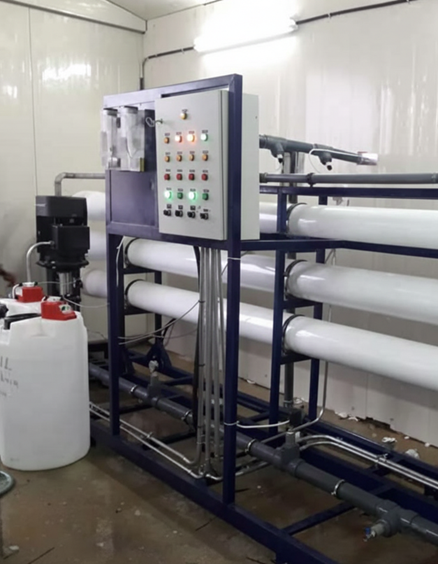
Membrane Bioreactor (MBR) Technology
Membrane bioreactor (MBR) technology has gained significant traction due to its ability to integrate biological treatment with membrane filtration. This approach produces high-quality wastewater with low biological oxygen demand (BOD) and chemical oxygen demand (COD) levels, making it suitable for both residential and industrial applications. MBR systems facilitate continuous operation and improve pollutant removal efficiency, supporting sustainable water reuse practices.
Smart Filtration Systems
The integration of smart filtration systems is another notable development. These systems utilize IoT-connected sensors and automated quality control mechanisms to optimize treatment processes in real time. By enabling predictive maintenance and ensuring regulatory compliance, these technologies enhance the reliability and efficiency of greywater recycling solutions.
Decentralized Treatment Solutions
Decentralized treatment solutions are becoming increasingly important as urban areas expand and the demand for water management rises. Greywater treatment systems often utilize modular systems that can be installed on-site. This provides a cost-effective and flexible approach to treating this water. Technologies such as electrolytic oxidation are being developed to target specific pollutants while minimizing environmental impacts.
Important article on greywater reuse in the Kingdom: A technical guide to complying with the highest national standards