

Types of Laboratory Tests for Greywater Treatment
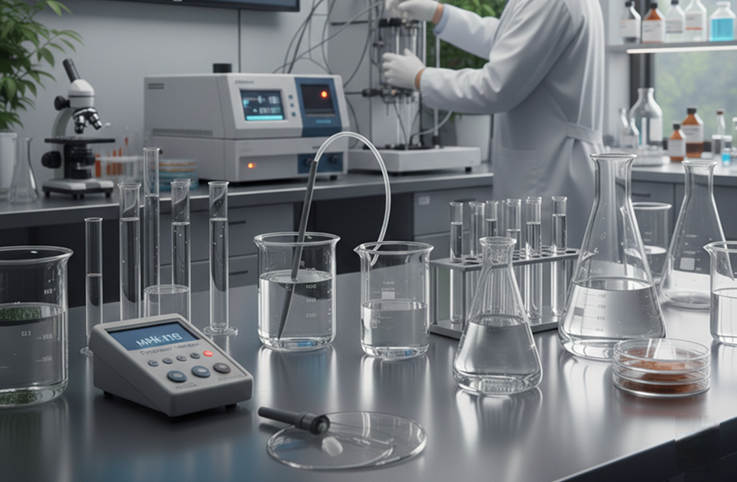
Laboratory testing for greywater treatment is crucial for assessing its quality and safety before reuse or discharge, addressing significant health and environmental concerns. These tests are essential for evaluating various parameters. That determines greywater’s suitability for applications. Such as irrigation and industrial processes. They help ensure compliance with regulatory standards. Prominent testing methods include assessing physical properties, chemical composition, and biological safety. Each contributes to a comprehensive understanding of greywater quality.
The main categories of laboratory tests for greywater treatment include physical tests, such as suspended solids analysis. Chemical tests such as pH, total dissolved solids (TDS), and heavy metal content measurements, and biological tests. This assesses the presence of microorganisms and biological oxygen demand (BOD). Each of these tests plays a vital role in identifying potential contaminants and measuring the effectiveness of treatment processes.
The accuracy and reliability of these tests are enhanced by advanced methodologies. Including the use of automated analytical techniques and controlled experimental conditions. This facilitates precise measurements and reproducibility of results. The challenges facing greywater testing protocols are significant, particularly regarding regulatory compliance, the complexity of traditional analytical methods, and safety concerns related to the hazardous chemicals used in testing. Operators must adhere to stringent regulations while maintaining accurate records and ensuring the efficiency and safety of testing methods for both personnel and the environment.
The need for mobile and flexible testing solutions is also critical, as greywater assessments are often conducted in diverse and remote locations, highlighting the necessity of developing testing technologies and methodologies. Overall, greywater treatment laboratory testing not only supports environmental sustainability but also plays a vital role in protecting public health by ensuring that treated greywater meets safety standards. As regulatory frameworks evolve and technology advances, the importance of rigorous testing protocols increases, supporting effective greywater management strategies.
Types of Laboratory Tests
Greywater treatment laboratory tests are essential for assessing the quality and safety of greywater before its reuse or discharge into the environment. These tests can generally be categorized into several types based on the criteria they measure.
Physical Tests
The suspended solids (SDS) test determines the concentration of solid particles in greywater. High levels may indicate poor water quality and may require pretreatment to reduce turbidity before further treatment.
Chemical Tests
The pH test measures the acidity or alkalinity of greywater, which is crucial for understanding its potential impact on human health and aquatic life. Safe pH levels for greywater typically range between 6.5 and 8.5, ensuring it does not negatively affect biological processes in treatment systems.
Total Dissolved Solids (TDS)
The TDS test determines the concentration of dissolved substances in greywater. High TDS levels may indicate the presence of contaminants that may require additional treatment before reuse.
Heavy Metal Testing
Heavy metal testing is conducted to detect potentially toxic elements such as lead, cadmium, and mercury in greywater. This test is essential to ensure that treated greywater does not pose any health or environmental risks.
Chemical Oxygen Demand (COD) and Total Organic Carbon (TOC) Tests
COD and TOC tests are conducted to assess the organic matter content in greywater. These tests help determine the biodegradable fraction of wastewater, which is crucial for designing effective treatment processes.
Biological Tests
Microbiological Testing
This type of test identifies and quantifies microorganisms present in greywater, such as bacteria and protozoa. Understanding the microbial community is essential for assessing the safety of greywater for irrigation or other uses.
Biooxygen Demand (BOD)
The BOD test measures the amount of oxygen consumed by microorganisms during the decomposition of organic matter in greywater. This test is important for assessing the level of organic pollution and the potential impact on receiving water bodies if greywater is discharged.
See also: Laboratory Tests in Greywater Treatment Plant Design and Construction
Advantages of Laboratory Testing
Laboratory testing offers significant advantages over field testing, including greater control over experimental conditions and the reproducibility of results according to standardized protocols. This controlled environment enables researchers to study the specific effects of greywater on various parameters.
High Accuracy
Furthermore, laboratory testing is considered the gold standard in water quality assessment due to its accuracy and ability to detect low levels of contaminants.
Advanced Methodologies
Advanced methodologies for greywater analysis and treatment incorporate a range of sophisticated techniques designed to ensure accurate measurement and effective treatment of contaminants.
Standardization Technique
One prominent method is standardization, which involves adding known amounts of a standard to the sample matrix. This method compensates for matrix effects that can alter the analytical signal, enabling more reliable analysis of the components within greywater samples. This process generally involves preparing new standards within a filter. The sample is calibrated by adding these known amounts to portions of the treated sample solution, allowing for the creation of a calibration curve that accurately reflects the sample conditions.
Sample Handling and Preservation
Effective sample handling is crucial for obtaining reliable results. Ideally, samples should be analyzed within 24 hours of collection. If this is not possible, samples should be refrigerated at 4°C, with hydrochloric acid (HCl) added at collection to stabilize their composition. This approach mitigates problems caused by the loss of volatile compounds or changes in chemical composition due to prolonged storage.
Automated Analytical Techniques
Automated methods have largely replaced manual methods due to their speed and high accuracy. Techniques such as infrared spectroscopy are commonly used, and efficient analysis requires specialized equipment. For example, a 2000 mL separating funnel and suitable cells made of infrared-resistant glass are recommended for sample preparation and analysis.
Titration and Measurement
To ensure the accuracy of measurements, it is essential to prepare standard solutions that reflect the expected concentration ranges in greywater samples. The calibration process involves conducting a series of standard solutions and plotting the results to create a calibration curve, which serves as a reference for determining the concentration of unknown samples.
Furthermore, automated continuous-flow systems, such as the Techmcon AutoAnalyzer, have been implemented to analyze water quality with high efficiency and accuracy, enabling laboratories to maintain high standards of accuracy and consistency across laboratories. These advanced methodologies play a vital role in the effective management and treatment of greywater, ensuring that water quality meets regulatory standards and environmental safety requirements.
Challenges of Testing Protocols
Greywater treatment testing protocols face several significant challenges that can affect the accuracy and reliability of results.
Regulatory Compliance and Reporting Requirements
A major challenge is the need to comply with stringent regulations imposed by agencies such as the U.S. Environmental Protection Agency (EPA) and local environmental authorities. These regulations impose strict limits on pollutants and require continuous reporting of discharge data. Keeping up with changing regulations while maintaining accurate audit records can be a daunting task for those working in the wastewater treatment industry.
The Complexity of Traditional Analytical Methods
Traditional analytical methods for greywater testing typically involve complex preparation steps, including manual mixing of chemicals, instrument calibration, and precise measurement procedures. These complex processes can increase the likelihood of human error and consume significant time and resources. Therefore, simplifying these procedures is essential for improving testing efficiency and accuracy.
Read also: How to Schedule Water Quality Tests
Exposure to Hazardous Chemicals
Many traditional water testing methods rely on the use of corrosive, toxic, or hazardous chemicals. This not only poses risks to worker safety but also raises environmental concerns regarding the improper handling or disposal of these materials. Compliance with safety regulations can add further costs and complexity to the testing process. These risks can be mitigated by using pre-packaged and pre-prepared chemicals, which enhances user safety by minimizing direct contact with hazardous substances.
Portability and Flexibility Limitations
The limited portability and flexibility of traditional laboratory equipment present another challenge. In many cases, wastewater testing must be conducted in the field. As is the case with remote discharge points or decentralized treatment systems, standard laboratory equipment is often bulky and fragile, making it unsuitable for field assessments. This limitation restricts the ability to conduct immediate assessments, which are essential for effective greywater management.
Standards and Guidelines
Monitoring and managing the health of water sources, particularly in the context of greywater treatment. These standards provide a framework for environmental authorities to identify areas of concern and implement appropriate pollution control measures. By establishing acceptable levels of pollutants, these standards not only protect public health but also maintain environmental integrity, enabling a safe environment for recreation and wildlife.
Testing Standards
Analytical Techniques
The most common analytical techniques used in greywater quality testing include pH testing, total dissolved solids (TDS) measurement, heavy metal testing, spectrophotometry, and microbial testing. Each method provides crucial information about the presence of pollutants and overall water quality. For example, pH testing is essential for assessing the acidity or alkalinity of the water, with safe levels ranging from 6.5 to 8.5.
Quality Control Procedures
Implementing rigorous quality control procedures, including accurate labeling and comprehensive documentation, is vital for maintaining compliance with water quality standards. Ongoing collaboration with regulatory bodies and adherence to environmentally friendly practices enhance compliance with regulations, support sustainability, and minimize environmental risks.
Importance of Compliance
Adherence to approved water quality standards is critical for the operation of greywater treatment companies. Failure to comply with these standards can result in substantial financial penalties and potential health risks. Ensuring that discharged pollutants comply with environmental safety standards not only reduces operating costs but also contributes to a healthier environment for future generations.
Applications of Laboratory Testing
Laboratory testing plays a crucial role in the evaluation and treatment of greywater, providing valuable insights into its chemical, physical, and biological properties. These tests enable researchers and specialists to understand the environmental and public health impacts of greywater. This leads to informed decisions regarding treatment options.
Testing in a Controlled Environment
One of the most important applications of laboratory testing is the ability to conduct experiments in a controlled environment. This control allows researchers to manipulate various factors, such as temperature, lighting, and nutrient levels, to assess how these conditions affect the environmental impact of greywater. By establishing cause-and-effect relationships according to standardized protocols, laboratory testing helps validate experimental results, which is crucial for developing effective greywater treatment strategies.
Measuring Contaminants
Laboratory testing is essential for measuring a wide range of contaminants present in greywater. Common analytical techniques include pH testing, total dissolved solids (TDS) assessment, heavy metal analysis, spectrophotometry, and microbial testing. Each of these methods provides essential information about water quality and safety, helping to identify potential health risks associated with greywater reuse. For example, pH testing is fundamental to determining the suitability of greywater for various applications. Safe pH levels range from 6.5 to 8.5.
Experimental Replication
Experimental replication is another important advantage of laboratory testing. By conducting tests multiple times, researchers can ensure the reliability and consistency of results, allowing for a deeper understanding of greywater’s environmental impacts. This is particularly important when developing new greywater treatment systems or protocols, as it ensures that the results are not anomalies but rather representative of general trends.
Advances in Detection Methods
Recent advancements in detection methods have significantly enhanced the effectiveness of greywater laboratory testing. Innovations such as optical detection and electrochemical technologies enable the identification of low concentrations of pollutants, providing researchers with effective tools for monitoring greywater quality. These advancements enable accurate and timely assessments, which are essential for proactive water management strategies.
Technology Integration
The integration of technology into laboratory testing has revolutionized water quality monitoring. Electronic systems facilitate real-time data collection and analysis, enabling the immediate detection of any changes in water quality parameters. Furthermore, digital data management platforms improve access to water quality information, fostering community engagement in water management efforts.